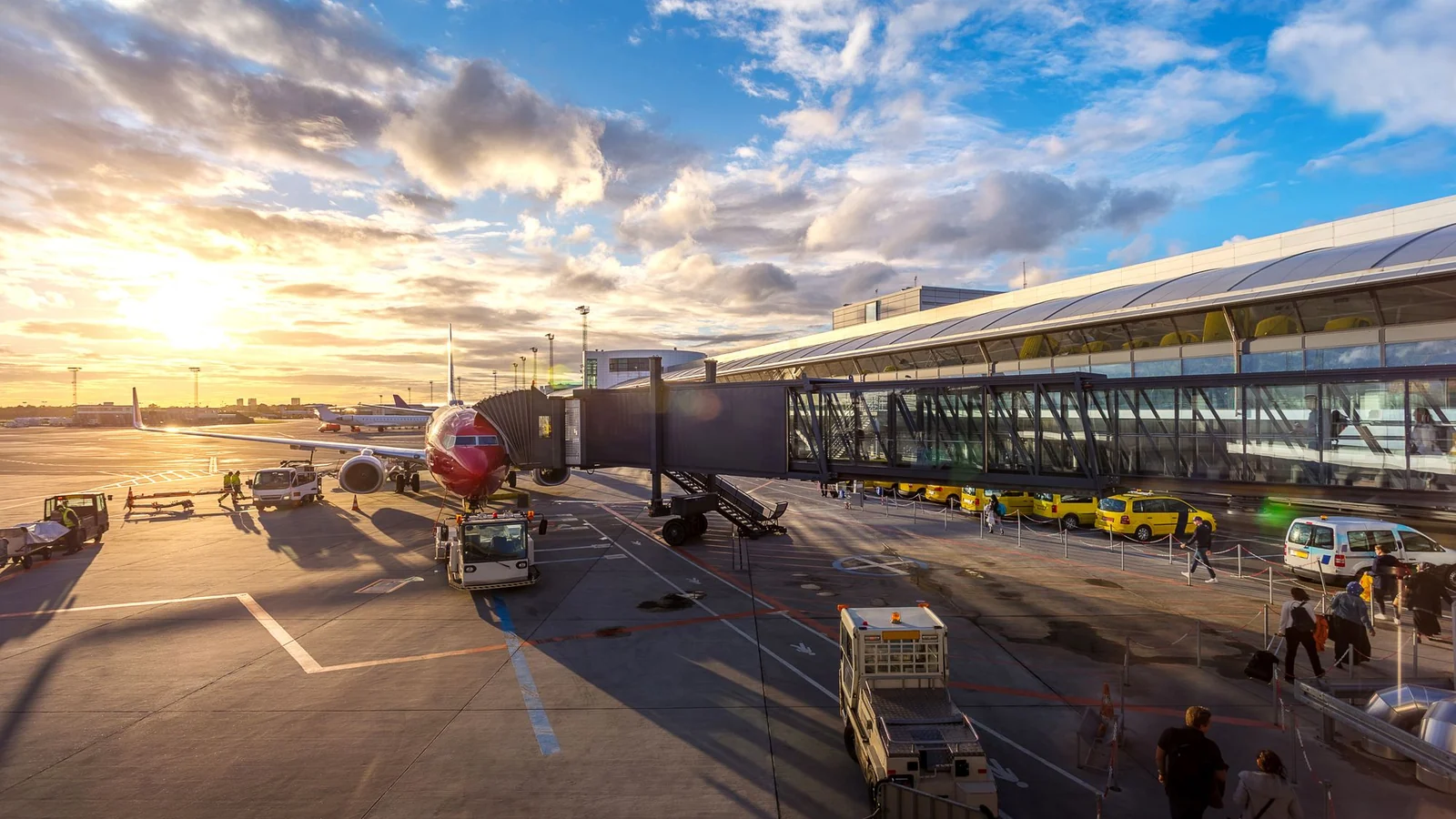
Your 07:10 flight finally lands after lunch, the children are tired, and you have spent more on airport food than planned. An airport delay claim example payout can show whether that frustrating wait may translate into compensation — and whether the airline should also cover the costs you incurred.
For many UK travellers, the key number is not the delay shown on the departure board. It is how late you arrive at your final destination. Under UK flight-delay rules, an eligible delay of three hours or more can lead to a fixed compensation payment, usually based on flight distance rather than the price of your ticket.
What an airport delay claim payout actually covers
There are two separate things to consider: fixed compensation for lost time, and reimbursement for reasonable care costs while you wait. They are often confused, but you may be entitled to both.
Fixed compensation applies when the delay meets the legal threshold and was within the airline's control. The usual UK compensation figures are £220 for flights up to 1,500km, £350 for flights between 1,500km and 3,500km, and £520 for flights over 3,500km. These are per passenger, not per booking.
The airline normally measures the delay at arrival, not take-off. In practice, this means the time when at least one aircraft door is opened at your destination. A flight that leaves four hours late but makes up time in the air may not qualify if it arrives under three hours late.
Care costs are different. Depending on the length and distance of the delay, the airline should provide or reimburse reasonable meals, refreshments, communications and, where needed, hotel accommodation and transport to the hotel. Keep every receipt. An expensive celebratory meal or luxury hotel upgrade is unlikely to be repaid in full, but sensible spending usually gives you a stronger claim.
Airport delay claim example payout: three realistic scenarios
A delayed city break from Gatwick to Barcelona
A couple are booked on a Gatwick to Barcelona flight, around 1,100km. A technical issue delays departure, and they arrive at Barcelona Airport four hours and ten minutes behind schedule.
If the airline cannot show that the cause was an extraordinary circumstance, each traveller could claim £220. Their total fixed compensation would be £440. If they also bought reasonably priced food and drinks during the wait because no vouchers were supplied, they can request those costs separately with receipts.
The original ticket cost does not change the calculation. Whether the couple paid £45 each in a sale or £220 each during a busy weekend, the standard compensation figure is still £220 per eligible passenger.
A family delay from Manchester to Tenerife
A family of three flies from Manchester to Tenerife, a route that falls within the 1,500km to 3,500km compensation band. They arrive three hours and 25 minutes late after a delay caused by an operational issue affecting the aircraft.
A successful claim could be £350 per passenger, making the potential payout £1,050 for the family. That is why it is worth checking a delay even where the holiday itself can still go ahead.
If the airline provided meal vouchers, use them where practical. If the voucher value was clearly insufficient or unavailable at the open airport outlets, retain receipts for necessary purchases. The aim is to show reasonable costs caused by the disruption, not to turn the delay into extra holiday spending.
A long-haul delay from London to New York
Four passengers travelling from London to New York arrive four hours and 40 minutes late because of a problem the airline was responsible for managing. As the route is over 3,500km, each eligible traveller may be due £520. For a family of four, that could mean £2,080 in fixed compensation.
There is a possible reduction when an airline reroutes passengers and gets them to their final destination within a set arrival window. On a long-haul route, compensation can be reduced by 50% if the replacement flight arrives less than four hours late. In that situation, the potential amount may fall to £260 per person rather than £520.
This is one reason to check the actual arrival time on your rerouted itinerary rather than assuming that every cancelled or delayed long-haul flight produces the maximum payment.
When a delay claim may not pay out
A delay of three hours or more does not automatically mean compensation. The airline can refuse fixed compensation if it proves the disruption was caused by extraordinary circumstances and that it took all reasonable steps to avoid the delay.
Examples can include severe weather, air traffic control restrictions, airport security risks, political instability or certain external strikes. Routine technical faults and staffing problems are not always extraordinary, especially when they relate to the airline's normal day-to-day operation. The facts matter, so a vague explanation such as “operational reasons” is not necessarily the end of the matter.
You can still be entitled to care during a long delay even if bad weather means compensation is not due. That distinction matters when you are deciding whether to buy food, arrange an overnight stay or wait for airline instructions.
A delay of two hours and 59 minutes at final arrival also falls short of the standard compensation threshold. However, the airline's duty to provide care may start earlier, depending on the flight distance.
Check which flights are covered before claiming
UK rules generally protect passengers departing from a UK airport on any airline, as well as passengers arriving in the UK on a UK airline. Rights for trips starting in the EU, or flights operated by non-UK carriers, can involve EU rules or different protections.
For connecting journeys booked under one reservation, look at the delay at your final destination. Missing a connection because the first flight ran late can therefore create a valid claim even if that first flight was not delayed by three hours on its own.
Separate tickets are more complicated. If you booked Manchester to Amsterdam with one airline and Amsterdam to Rome with another, the second airline may have no obligation to protect you when the first independent booking arrives late. Leave sensible connection time when comparing lower fares, particularly on self-transfer itineraries.
How to make a strong airport delay claim
Claim from the operating airline — the carrier that actually flew, or was meant to fly, the delayed service — rather than the comparison site or travel agent that sold the ticket. Booking through a third party does not remove your passenger rights, but it can make it especially useful to keep your booking confirmation and boarding pass.
Include your booking reference, flight number, travel date, names of the affected passengers, and the scheduled and actual arrival times. Attach receipts for food, accommodation, transport or other reasonable care expenses. State clearly that you are requesting compensation for the delay and reimbursement of expenses where applicable.
Take screenshots of the delay notice and make a note of announcements at the airport while the details are fresh. Airlines sometimes provide a disruption reason later, and those records can help you query an explanation that does not match what you were told on the day.
You can use a flight compensation service if you prefer help with the process, but check its fee before proceeding. For a straightforward claim with clear documents, submitting directly to the airline may leave more of any successful payout in your pocket. For the full claim walkthrough, see our step-by-step UK flight delay compensation guide.
Don’t overlook your other options
Once a delay reaches five hours, you may be able to choose not to travel and request a refund for the unused flight. If you are mid-journey, this may also include a return flight to your original departure point where appropriate. It depends on the itinerary and whether continuing the trip still serves its purpose.
Travel insurance can sometimes help with benefits not covered by airline rules, but avoid claiming the same expense twice. It may be more useful for knock-on losses such as an unused hotel night, although policy terms, excesses and evidence requirements vary widely.
Before your next trip, compare schedules as carefully as fares. A very cheap itinerary with a tight connection can cost more in stress and missed holiday time than a slightly pricier direct flight. Save your documents, know the arrival-time threshold, and treat a long delay as something worth checking — not simply something you have to write off.