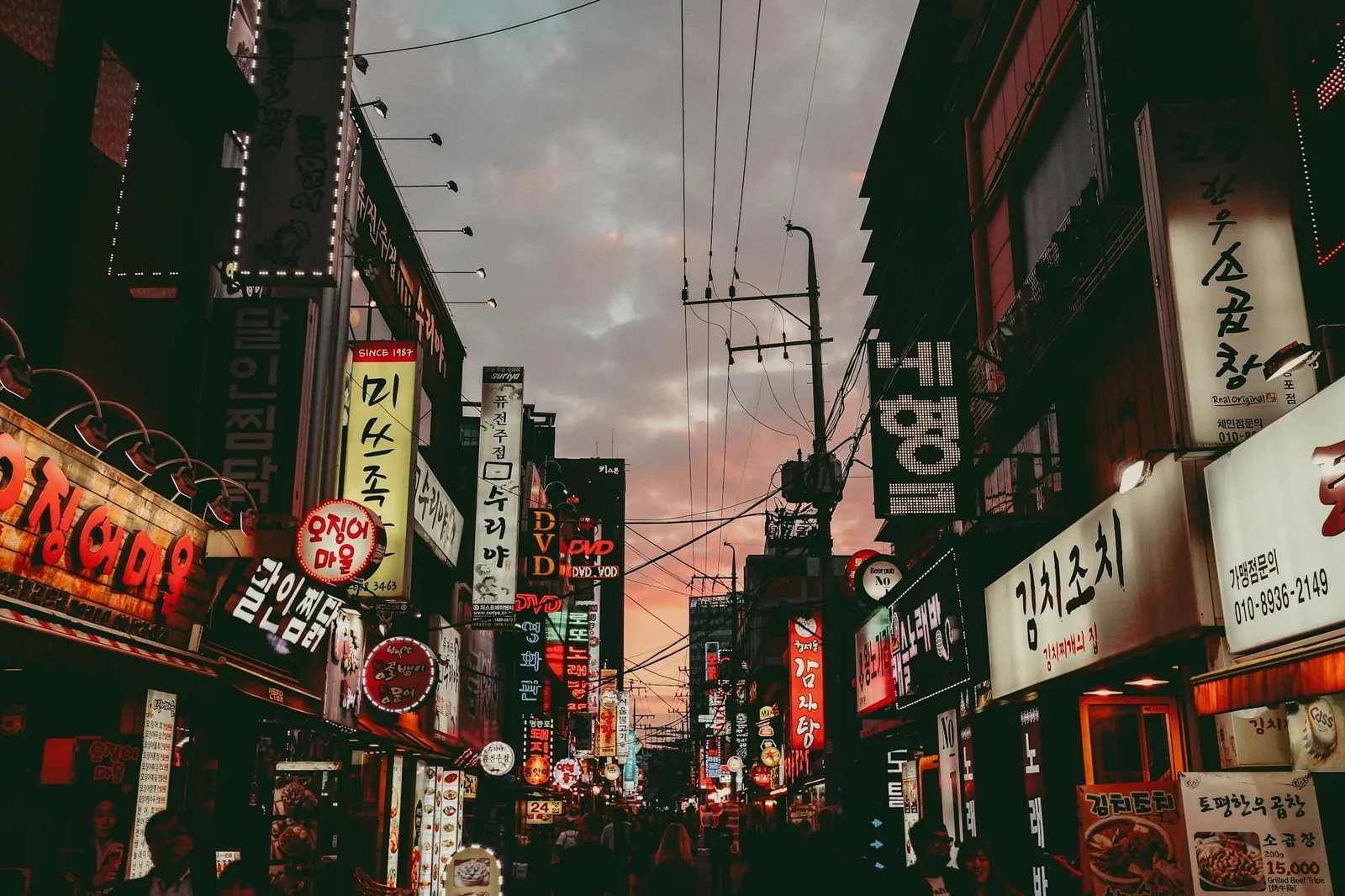
Palaces north of the river, nightlife to the south
Seoul is a huge, fast-moving capital split by the Han River, and that divide is a handy way to think about where to stay. North of the river you'll find the historic core — royal palaces, the hanok lanes of Bukchon, and the shopping and street food of Myeongdong and Insadong. South of it lies modern Gangnam, with its business hotels, department stores and polished nightlife. The city's superb metro ties it all together, which means the right line and station matter more than paying for a fancier room.
For a first visit, basing in the historic north puts the headline sights on your doorstep; for business, shopping or K-pop-driven trips, the south often makes more sense. Here's how the main districts feel and who each one suits.
Best areas to stay in Seoul
Traveller tip: First visit → Myeongdong for metro + shopping. History / hanok pace → Jongno / Insadong. Upscale modern → Gangnam. Nightlife → Hongdae or Itaewon — quieter streets if you need early palace mornings.
| Area | Best for | Access | Trade-off |
|---|---|---|---|
| Myeongdong | First visit, shopping, metro | Line 4 Myeongdong | Busy shopping streets |
| Jongno / Insadong | Palaces, tea houses, Bukchon | Line 3 Anguk | Less nightlife density |
| Gangnam | Business, COEX, K-pop events | Line 2 / 9 | South-of-river commute |
| Hongdae / Itaewon | Nightlife, younger buzz | Line 2 / 6 | Late noise |
Myeongdong
Myeongdong is the convenient first-timer's base: central, packed with shopping and street food, and well placed on the metro for the palaces and markets, with hotels across the range. Line 4 Myeongdong; street tteokbokki after Namdaemun Market in the morning, not a sit-down on the main shopping street at 13:00.
Jongno and Insadong
Neighbouring Jongno and Insadong are more atmospheric — close to Gyeongbokgung palace, traditional tea houses and the Bukchon hanok village — and suit travellers who want history and a slower, more cultural pace. Line 3 Anguk; tea on Insadong-gil after Gyeongbokgung at opening — Gwangjang Market is bindaetteok at lunch, not a palace-side restaurant at noon.
Gangnam
Gangnam, south of the river, is the upscale modern district: business hotels, designer shopping and slick dining, handy for the COEX mall and convention centre and a magnet for K-pop events, which can move room rates well in advance. Line 2 Gangnam or Line 9 Sinnonhyeon; COEX food court for lunch, not Garosu-gil at Saturday 14:00.
Hongdae and Itaewon
For nightlife and a younger, creative buzz, Hongdae (around the universities) brings live music and late dining, while Itaewon is the international, restaurant-heavy quarter — both livelier than restful, so weigh the noise if you want early nights. Line 2 Hongik University; street toast before 11:00, then the campus lanes — eat after 21:00 if the night is the point. Line 6 Itaewon; dinner on a side street off Itaewon-ro after 20:00, not a rooftop at sunset.
Typical mid-range stays are approximately £70–£110 per room per night for a standard room for up to 2 adults — an approximate 2026 planning guide for a good mid-range Seoul hotel in Myeongdong or Jongno. Gangnam business hotels and peak K-pop event weeks usually cost more.


