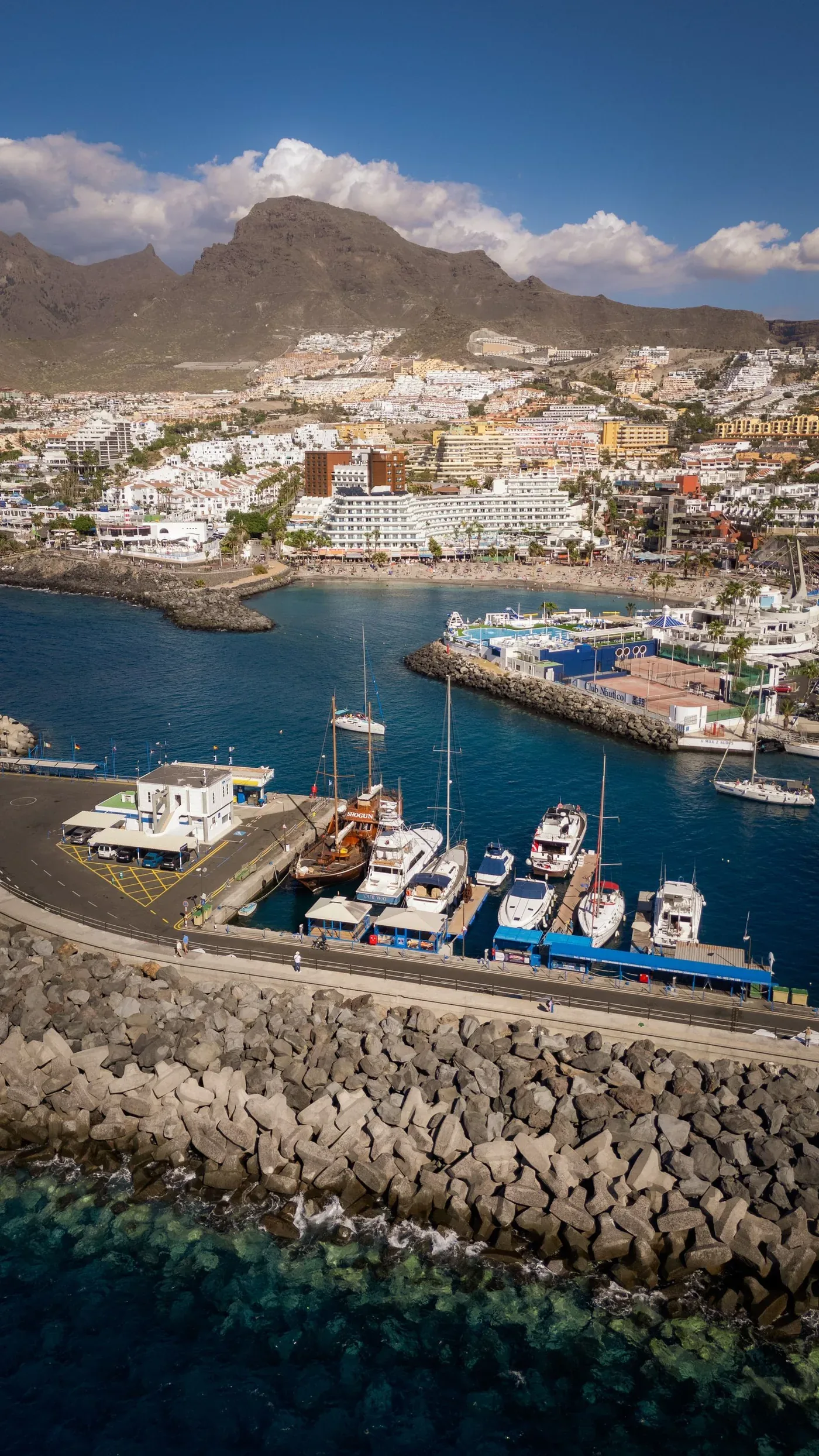
South sun versus north greenery — Tenerife has two climates
Tenerife is really two islands in one, and the wrong coast will sour a week even if the hotel photos look perfect. The south around Costa Adeje, Los Cristianos and Playa de las Américas is the classic UK winter-sun product: reliable sunshine, big pools, marina walks and short transfers from Tenerife South (TFS). The north, around Puerto de la Cruz, Santa Cruz and La Laguna, is greener, cooler and more interesting for walkers who want Anaga trails, botanical gardens and a working city rather than a resort strip.
Pick the climate before you compare star ratings. A south-coast all-inclusive can be excellent for a half-term pool week and miserable if you planned Teide sunrises and north-coast fishing towns. A north-coast boutique stay can feel atmospheric in March and simply damp if your group only wanted beach clubs. The island drives in about an hour from Adeje to Puerto de la Cruz, but the weather, noise and evening rhythm change completely.
Best areas to stay in Tenerife
Traveller tip: Pick the climate before the hotel photo. Winter-sun pools → Costa Adeje or Los Cristianos (TFS). Nightlife → Las Américas. Walkers / gardens → Puerto de la Cruz (TFN). Wrong airport = a long, tired transfer.
| Area | Best for | Access | Trade-off |
|---|---|---|---|
| Costa Adeje | Families, calmer south resort | ~20–30 min from TFS | Not a quiet fishing village |
| Los Cristianos | Harbour, ferries, milder evenings | Next to Américas | Less nightlife than Américas |
| Las Américas | Nightlife / package strip | South corridor | Noise near the main drag |
| Puerto de la Cruz / north | Walkers, gardens, Canarian town | TFN pairing | Cooler / greener than south |
Costa Adeje, Las Américas and Los Cristianos
Costa Adeje is the calmer south-coast default for families and couples who still want a resort week. You get marina promenades, sheltered swimming platforms and a denser choice of mid-range and premium hotels without living on the noisiest strip. Transfers from TFS are usually twenty to thirty minutes, which is why so many UK packages land here. It is not a secret fishing village — it is a well-run sun belt — but it is quieter after dark than Las Américas. El Duque marina then lunch inland of the promenade, not a sit-down on the strip at 13:00. TITSA buses run the Adeje–Américas corridor.
Playa de las Américas suits nightlife, stag groups and anyone who wants the beach and the bars on the same walk. Expect weekend noise near the main drag; ask for a room that does not face the loudest streets if you still want sleep. Eat inland of Avenida de las Américas; the Veronicas strip is after 23:00, not lunch. Los Cristianos sits next door with a working harbour, ferry links toward La Gomera and a slightly more local evening pace. Harbour promenade; Gomera ferry in the morning, then a harbour lunch — not Las Américas at 13:00. First-timers who want sun without committing to the party strip often do better in Adeje or Los Cristianos and day-trip into Las Américas, rather than the other way round.
Puerto de la Cruz, Santa Cruz and the high villages
Puerto de la Cruz is the north’s old resort town: black-sand coves, the botanical garden, a proper high street and cooler evenings than the south. It suits walkers, couples who like atmosphere over mega-pools, and anyone using Tenerife North (TFN) rather than TFS. Botanical garden or Lago Martiánez in the morning, then a coffee on Calle Quintana. Santa Cruz is the island capital — museums, Carnival, ferry terminals and a city grid that feels more like mainland Spain than a holiday brochure. Mercado de Nuestra Señora de África is morning. La Laguna, a UNESCO old town inland from TFN, is walkable, student-lively and a strong base if you care more about streets than swimming. Walk the UNESCO streets from TFN, not a TFS transfer after landing.
Hikers aiming for Teide or the Anaga rural park should look at the north coast or higher villages such as Vilaflor. Early summit starts shave a painful amount of driving off a south-coast hotel. A car is almost essential for those days; resort shuttles rarely cover both coasts. If your week is mostly Teide, Masca gorge and laurel forest, do not book a south-coast tower just because the pool photograph is better.
Who each coast suits — and what you pay for
Families and first-time winter-sun groups usually want Costa Adeje: short TFS transfer, kids’ clubs, and a beach or pool you can use without a hire car. Couples who like evening restaurants more than foam parties often prefer Adeje’s marina side or Puerto de la Cruz. Solo travellers and nightlife weeks land in Las Américas and accept the noise. Premium stays cluster in Costa Adeje’s calmer coves and a handful of adults-only north-coast resorts; budget rooms are easier to find in Las Américas and older Puerto de la Cruz blocks — but check recent reviews for renovation, not just the star rating on the booking screen.
Typical mid-range south-coast rooms for two adults often sit in a broad euro band that moves with UK school holidays; treat any number on this page as a planning guide, not a live quote. Christmas, February half-term and Easter tighten Adeje and Las Américas first. Carnival week in Santa Cruz is a separate spike: city hotels fill while south-coast towers can still have space. Late spring and autumn usually balance warm sea with fewer package weeks — the better window if you can travel outside school dates.
Airports, transfers and whether you need a car
Tenerife South (TFS) is the airport for Adeje, Las Américas and Los Cristianos. Hotel coaches, taxis and hire-car desks are set up for that flow. Tenerife North (TFN) sits beside Santa Cruz and La Laguna and is the cleaner pairing for Puerto de la Cruz and Anaga. Flying into TFS for a north-coast hotel means a long island transfer after a four-hour UK flight — doable, but not the bargain it looks on a map. Direct UK flights serve both airports in the winter-sun season; confirm the code on the ticket before you lock a non-refundable room.
A car is optional for a south-only resort week: the strip is walkable and buses run the Adeje–Américas corridor. It becomes useful the moment you want Teide at sunrise, Masca, north-coast swimming or a day in Santa Cruz. Buses exist, but they are slow outside the main corridors. Compare all-in hire cost (deposit, excess, insurance) on the car hire hub, and match pickup to TFS or TFN. For the flight itself, see London → Tenerife or Manchester → Tenerife, then add days on Tenerife activities if the hotel shuttle only covers the south strip.


