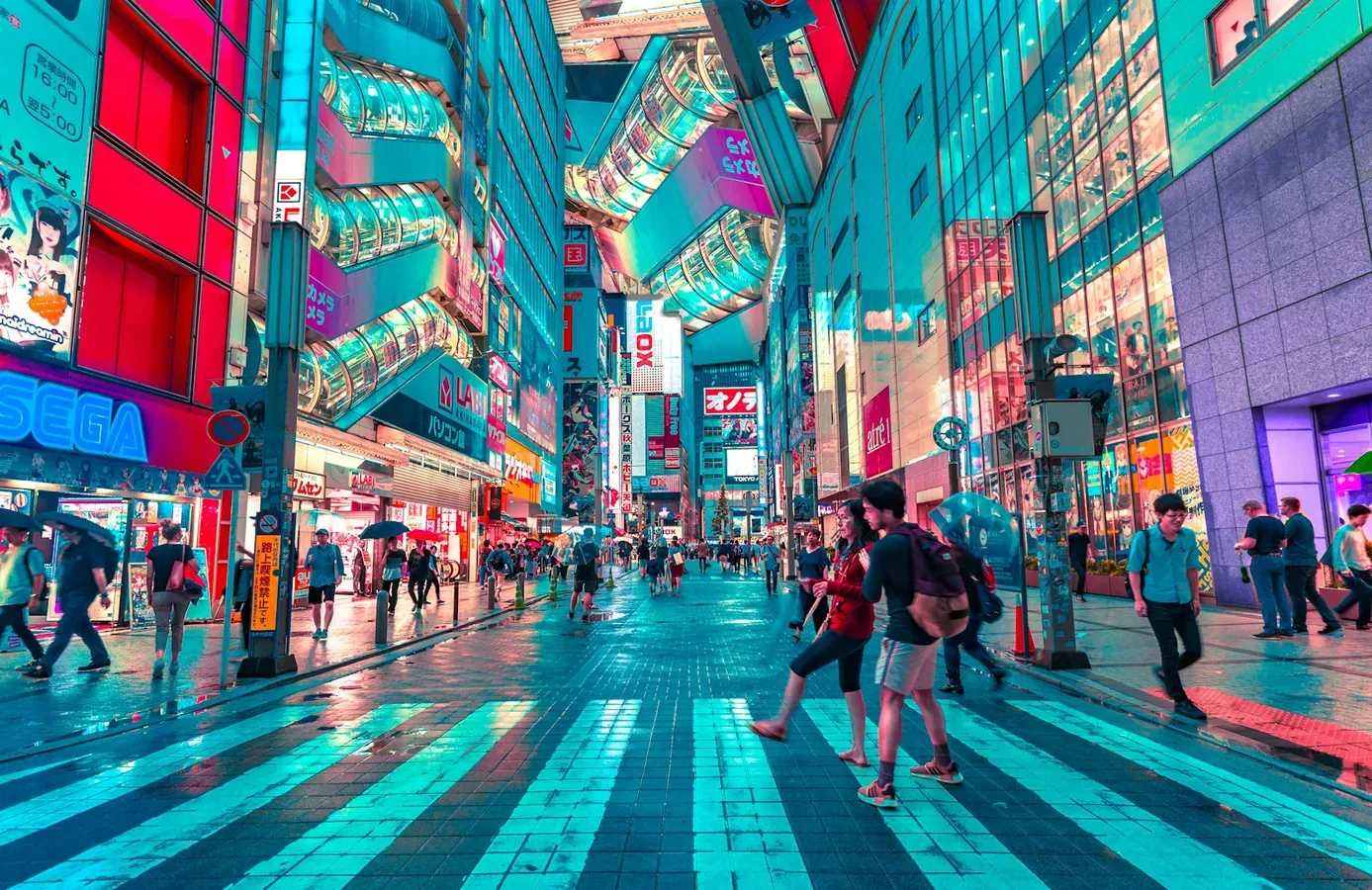
Tokyo rewards a clear sleep base. On a four- to six-night city stay you will not “do the whole map” — you will ride a few JR and metro lines hard, take one temple or bay day, and use walking for the rest. Book the area that matches your arrival and evenings, then compare hotels inside that zone. For the west-side hub vs nightlife fork see Shinjuku vs Shibuya; for the shopping-polish vs temple-morning fork see Ginza vs Asakusa; for hotel cards and the Decision Kit use the Tokyo stays guide; for HND and NRT timing see flights to Tokyo.
Book in this order: area → exact station exit or block (Kabukicho neon vs Ginza retail calm vs Asakusa temple approach matters) → HND / NRT matched to that pin → IC card on arrival → then lock the room with flexible cancellation when dates might move.
Comparison snapshot — main Tokyo sleep bases
| Area | Best for | Hotel expectation | Trade-off |
|---|---|---|---|
| Shinjuku | First visits, JR hubs, dense hotel stock, late dining | Mid to premium; sakura, Golden Week and New Year fill early | Busy and less charming — pick the block, not the neon |
| Shibuya | Nightlife, scramble evenings, Harajuku edges | Mid–premium; design and stream-side pins tighten on weekends | Temple mornings and some day trips need a hop |
| Ginza / Tokyo Station | Shopping polish, department-store dining, Shinkansen logistics | Mid–premium; Ginza retail corridors sit higher than Asakusa | Less neon nightlife and temple-doorstep mornings |
| Asakusa / Ueno | Temple mornings, park edges, families, quieter evenings | Often better mid-range value; Nakamise-front rooms fill early | West-side neon nights cost metro minutes every evening |
| Roppongi | International nightlife, Midtown dining, late evenings | Mid–premium; nightlife-adjacent pins tighten on weekends | Weaker first soft landing if temples or JR day trips own the trip |
Area profiles
Shinjuku
Atmosphere: The soft-landing Tokyo most first UK long-haul visits need — JR Shinjuku’s maze of exits, neon evenings, dense business-hotel stock and late ramen within a short walk. The default first-timer base when you want hub density without betting night one on a temple-to-scramble scramble after long-haul. Confirm quieter mid-block pins versus Kabukicho frontage; Shinjuku is not automatically silent after the last train.
Shibuya
Atmosphere: Crossing-energy Tokyo with scramble views, youth streets, Harajuku edges and nightlife that photographs as “Tokyo nights.” Strong for travellers who want evening atmosphere outside the lift; weaker if every morning starts at Senso-ji or a major JR day-trip without accepting a hop. Confirm stream-side hotel-tower calm versus a Center-Gai bar-front room — Shibuya is not one sleep personality.
Ginza / Tokyo Station
Atmosphere: Polished central Tokyo with department-store dining, retail corridors and the easiest Shinkansen logistics from Tokyo Station. Strong when shopping, sushi counters and Kyoto / Osaka onward trains already sit on the calendar; less ideal if every night wants scramble neon without accepting a metro hop. Ginza edges retail polish; Tokyo Station edges transfer mornings — neither is a nightlife default.
Asakusa / Ueno
Atmosphere: Temple-and-park Tokyo with Senso-ji mornings, Nakamise snacks, Ueno museum edges and quieter evenings than west-side neon. Strong when temple pacing and earlier nights own the trip; weaker if every evening wants scramble or Kabukicho without accepting metro minutes. Confirm quieter residential pins versus Nakamise-front rooms — and write the west-side hop into the booking before you land with bags.
Roppongi
Atmosphere: International nightlife Tokyo with Midtown and Roppongi Hills dining, late bars and a more global crowd than a pure Shinjuku business-hotel corridor. Strong when evenings and international food own the week; weaker if every day starts at Senso-ji or a Fuji day-trip without accepting a metro plan. Confirm quieter residential tower pins versus late bar-front rooms — Roppongi sleeps differently one block off the main strip.
Pros and cons — central Tokyo bases
Why a station-linked base wins
- Evenings without betting every night on rush-hour taxis
- Less wasted time between temple mornings and neon or shopping slots
- Easier soft landings after HND / NRT with a short last hop
- Better conversion for short 4–6 night city stays
What you pay for
- Higher nightly rates on sakura weeks, Ginza corridors and design Shibuya pins
- Noise on Kabukicho edges, scramble strips and Roppongi nightlife if you pick badly
- Compact rooms that hide under headline mid-range rates
- Peak sakura, Golden Week and New Year inventory disappears early
Who should choose which area?
- First-time UK long-haul visit — Shinjuku if JR hubs, hotel stock and late dining own the nights; Asakusa if temple mornings matter more; Ginza if shopping polish and Station logistics lead. Head-to-heads: Shinjuku vs Shibuya · Ginza vs Asakusa.
- Families with kids — Asakusa / Ueno for temple and park mornings; Shinjuku when densest JR coverage and stock are the daily rhythm; quieter Ginza pins when earlier nights beat neon.
- Nightlife-heavy weekend — Shibuya or Roppongi, with a pin that is not the loudest Center-Gai or bar-frontage if you have an 08:30 temple slot.
- Shopping-and-Shinkansen couple — Ginza / Tokyo Station, with a quieter block than the busiest retail strip.
- Temple-and-park mornings — Asakusa / Ueno for Senso-ji and Ueno Park pacing without sleeping on west-side neon.
- International dining evenings — Roppongi for Midtown / Hills nights. Full west-side neon fork: Shinjuku vs Shibuya.
- Value near central hubs — Asakusa mid-range or well-linked Ueno pins often soften Ginza peak pricing — still compare room size on the full total.
- Late HND or NRT arrival — Shinjuku or Ginza / Tokyo Station are usually kinder with bags; Asakusa and Shibuya need clearer last hops — and never book a far-suburb bargain for midnight bags alone.
Seasonal note: sakura weeks (roughly late March–early April), Golden Week and New Year push rates hardest along Shinjuku, Ginza and popular Asakusa pins. Humid summer hits street-level temple walks; clear autumn and dry winter still work if you dress for stations and evenings. Book the area early, not just any room that says “central.” For wider East Asia city pacing after the base is set, use the Asia planning hub.
Common mistakes
- Booking “central” from a map pin only — Central can mean a loud Kabukicho frontage, a dead office block, or a magical temple-side courtyard. Read the neighbourhood.
- Choosing Asakusa for a west-side neon itinerary without accepting the hop — Temple mornings yes; every scramble evening needs a plan.
- Choosing Shibuya for a JR day-trip soft landing — Nightlife evenings win; Fuji / Hakone doorstep ease does not.
- Mismatching airport to the hotel pin — A cheap NRT fare with a far Shibuya or Roppongi pin can erase day one. Match HND or NRT before you book.
- Saving money far off the JR hubs and commuting back every night — On a short city stay, the cheaper far pin often costs the soft landing in rush-hour time.
- Ignoring compact rooms — Headline mid-range rates without luggage photos are how suitcases end up in the shower. Compare floor plans inside the area you want to sleep in.
- Splitting hotels mid-stay on a short trip — One base; metro the rest.
- Ignoring noise reviews — Kabukicho edges, scramble strips and Roppongi nightlife sleep differently from courtyard pins one block in.
Final recommendation
If you are unsure, book Shinjuku for a first soft landing that still works when jet lag has you sleeping oddly. Choose Asakusa / Ueno when temple mornings and quieter evenings are the trip. Use Ginza / Tokyo Station when shopping polish and Shinkansen logistics own the days, Shibuya when scramble nightlife matters more than maximum JR stock, and Roppongi when international dining evenings own the nights — not because the photos look more “local.”
Then open stays with that pin fixed: where to stay in Tokyo · compare arrival options on flights to Tokyo · lock temple and city experiences via Tokyo activities · add eSIM/transfers on Travel Support · browse the wider region on the Asia planning hub · compare Shinjuku vs Shibuya · or Ginza vs Asakusa.
Frequently asked questions
What is the best area to stay in Tokyo for first-time visitors?
Shinjuku — JR hub density, hotel stock and late dining after long-haul. You want a walkable hub home base that still works when jet lag has you sleeping oddly. Full stays detail sits on the Tokyo stays guide.
Is Shinjuku or Shibuya better for a short Tokyo stay?
Shinjuku for JR hubs and hotel stock; Shibuya if nightlife and scramble evenings matter more. Both work — pick by evening atmosphere. Full head-to-head: Shinjuku vs Shibuya.
Where should families stay in Tokyo?
Asakusa / Ueno for temple and park mornings; Shinjuku when densest JR coverage and hotel stock are the daily rhythm; quieter Ginza pins when earlier nights beat neon. Skip far-suburb bargains after a late arrival. Full guide: where to stay in Tokyo for families.
Is Roppongi a good base for sightseeing?
Excellent for nightlife and Midtown dining evenings; weaker than Shinjuku for JR-hub soft landings and temple-doorstep mornings. Full west-side neon fork: Shinjuku vs Shibuya.
Should I book a cheaper hotel far from the JR hubs?
Only if you accept daily rush-hour hops into Shinjuku, Shibuya or Ginza. On a four- or five-night city stay, a mid-range Shinjuku, Ginza / Tokyo Station or Asakusa pin usually converts better.
When should I book a Tokyo hotel after choosing an area?
Fix the neighbourhood and exact station exit first, match HND / NRT, lock day-trip timing if JR hubs drive the trip, then compare stays — ideally with flexible cancellation if airport timing might move. Peak sakura and Golden Week fill earliest along Shinjuku, Ginza and popular Asakusa pins.