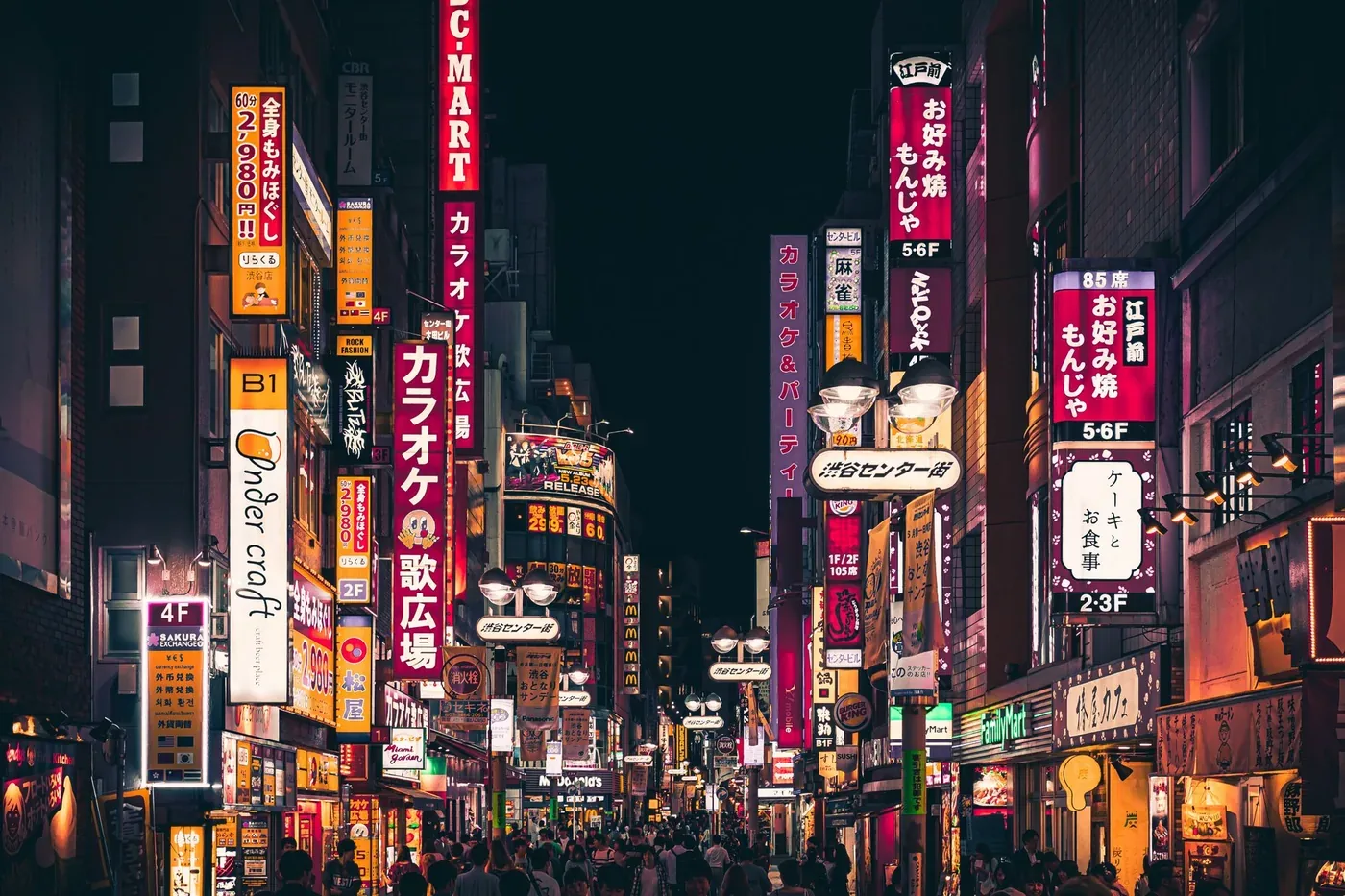
Shinjuku vs Shibuya is the booking fork most UK long-haul travellers hit once they have already ruled out a pure Asakusa temple week and a Ginza-only shopping stay. You are choosing between two workable west-Tokyo bases with different day-and-night personalities — not between “good Tokyo” and “bad Tokyo.” Fix the JR-hub-and-hotel-stock days versus nightlife-and-crossing evenings first; the hotel search gets easier after that. For the wider neighbourhood map see best area to stay in Tokyo; for the shopping-polish vs temple-morning fork see Ginza vs Asakusa; for hotel cards and neighbourhood notes use the Tokyo stays guide; for HND and NRT timing see flights to Tokyo; for temple and teamLab pacing after the base is set use Tokyo activities; for eSIM and transfers see Travel Support; for the wider East Asia city shape see the Asia planning hub.
Book in this order: Shinjuku or Shibuya → exact station exit or block (Kabukicho neon vs quieter business-hotel corridor matters) → HND / NRT matched to that pin → IC card on arrival → room with flexible cancellation if airport timing might move.
Comparison snapshot — Shinjuku vs Shibuya
| Factor | Shinjuku | Shibuya |
|---|---|---|
| Atmosphere | Classic first-visit west hub — JR maze, neon, dense hotel stock, late dining | Crossing energy — scramble, Harajuku edges, youth streets, nightlife nights |
| Hotels | Mid–premium; deep station stock; sakura and Golden Week fill early | Mid–premium; design and stream-side pins tighten on weekend nightlife demand |
| Transport | JR Shinjuku density; strong for day trips and west-side metro links | JR Shibuya / Yamanote; excellent for Harajuku and central hops; still busy with bags |
| Noise | Kabukicho and station exits can run late — pick the block, not the postcard | Scramble and Center-Gai buzz late; some hotel-tower pins sleep better |
| Walkability | Outstanding for station dining, department stores and neon evenings | Outstanding for scramble, Harajuku and nightlife clusters; temple mornings need a hop |
Area profiles
Shinjuku
Atmosphere: The Tokyo most first visits expect on the west side — JR Shinjuku’s maze of exits, neon evenings, dense business-hotel stock and late ramen within a short walk. Strong for travellers who want hub convenience and day-trip options without betting every morning on a long cross-city hop. Confirm whether your pin sits on a quieter corridor off the station or a Kabukicho-facing strip; Shinjuku is convenient rather than calm, and the block decides sleep quality more than the neighbourhood name.
Shibuya
Atmosphere: The scramble, youth streets, Harajuku edges and nightlife that photographs as “Tokyo nights” — often louder and denser at street level than a quieter Shinjuku business-hotel corridor. You trade JR-hub hotel depth for crossing energy and evening atmosphere; Senso-ji mornings and some day trips ask for a hop, while scramble views and Center-Gai food stays outside the lift. Confirm stream-side hotel-tower calm versus a bar-front room — Shibuya is not one sleep personality.
Pros and cons
Shinjuku wins when…
- JR hub density, hotel stock and late dining are the reason you booked
- You want the simplest west-Tokyo soft landing after HND or a Narita Express hop
- Day trips to Fuji, Hakone or elsewhere need a calm morning from a major JR node
- You accept neon and station density in exchange for hub convenience
Shibuya wins when…
- Nightlife, scramble evenings and youth-street energy lead the itinerary
- Harajuku and Meiji approaches matter more than maximum JR hotel stock
- You want crossing atmosphere outside the lift, not only as a day visit
- You accept a busier sleep street and a hop for temple mornings or some day trips
Who should choose this area?
- First-time UK long-haul visit, unsure — Default Shinjuku. You get JR hubs, hotel stock and late dining without betting night one on scramble crowds after jet lag.
- Nightlife-heavy weekend — Shibuya, with a pin that is not the loudest Center-Gai frontage if you have an 08:30 temple slot.
- Food-and-hub couple — Shinjuku, with a quieter block than Kabukicho’s latest neon strip.
- Families with kids — Shinjuku for hub density and stock; day-visit Shibuya when earlier nights matter more than sleeping on the scramble.
- HND soft landing — Both work via Monorail or Keikyu — match the code to the pin before you book.
- Late NRT arrival — Shinjuku is often the simpler first night with bags via Narita Express into the JR hub; a far Shibuya pin after midnight needs patience — budget that before the scramble photo.
Seasonal note: sakura weeks (roughly late March–early April), Golden Week and New Year push both hardest. Humid summer hits street-level walks; clear autumn and dry winter still work if you dress for stations and evenings. Choose the area early, then the room. For wider East Asia city pacing after the base is set, use the Asia planning hub.
Common mistakes
- Picking by scramble Instagram, not by airport code — A cheap NRT fare with a far Shibuya pin can erase day one. Match HND or NRT to the neighbourhood before you book.
- Sleeping on Kabukicho or Center-Gai “because it’s central” — Central for tourists is not the same as central for your trip. Dawn temple mornings do not need neon at 01:00.
- Treating them as interchangeable “west Tokyo” — They are both workable Tokyo. They are not the same trip.
- Ignoring compact rooms — Headline rates without luggage photos are how suitcases end up in the shower. Compare floor plans inside the area you want to sleep in.
- Booking the hotel before the trip type — Lock whether neon nights or JR day trips drive the stay, then sleep within a calm walk of that rhythm.
- Splitting hotels mid-stay — Pick Shinjuku or Shibuya once; metro the rest.
Final recommendation
If you are torn and this is a first Tokyo soft landing focused on JR hubs, hotel stock and late dining, book Shinjuku — densest west-side hub, practical rooms and a rhythm that still works when jet lag has you sleeping oddly. Choose Shibuya when nightlife, scramble evenings and youth-street energy are the reason you booked the city nights — especially if Harajuku days matter more than maximum JR stock. Value-watchers usually find slightly more mid-range flexibility in Shinjuku, provided they do not sacrifice a quiet corridor for a loud Kabukicho frontage.
Then open stays with that pin fixed: where to stay in Tokyo · compare the temple-and-shopping fork on Ginza vs Asakusa · zoom out to other neighbourhoods on best area to stay in Tokyo · compare arrival options on flights to Tokyo · lock temple and city experiences via Tokyo activities · add eSIM/transfers on Travel Support · browse the wider region on the Asia planning hub · or use the decision framework on how to choose a city-break neighbourhood.
Frequently asked questions
Is Shinjuku or Shibuya better for first-time visitors?
Shinjuku for JR hub density, hotel stock and late dining after long-haul; Shibuya if nightlife, crossing energy and youth streets matter more. Both work — pick by hub convenience versus nightlife feel. Full stays detail sits on the Tokyo stays guide.
Which is quieter at night — Shinjuku or Shibuya?
Neither is silent by default. Kabukicho / station exits and scramble / Center-Gai edges can both run late — quieter business-hotel corridors and some hotel-tower pins sleep better. Read the exact block, not the neighbourhood name.
Is Shinjuku or Shibuya better for families?
Shinjuku for hub density and stock; many families day-visit Shibuya and sleep elsewhere when earlier nights matter. In either area, filter for a lift after a late arrival.
Which area is better for food and evenings?
Shinjuku for dense izakaya and station dining; Shibuya for scramble energy and nightlife that runs later into youth streets.
Are hotels more expensive in Shinjuku or Shibuya?
Both mid-to-premium. Shinjuku often has slightly more mid-range stock; Shibuya design pins tighten on nightlife weekends. Always compare room size inside the area you want to sleep in.
How do I book after choosing one?
Lock the neighbourhood and station exit, match HND / NRT, then compare stays — ideally with flexible cancellation. Start on the Tokyo stays guide.